
Richmond County Criminal Docket Searches
Most Richmond County criminal docket searching happens on the North Carolina eCourts Portal. That is the Tyler Technologies system the county adopted with its Enterprise Justice conversion. Pick Smart Search. Type in a case number or a name. Choose a matching case, and the Case Summary opens; many people call this the Register of Actions. Treat it as a chronological court record. It is not an arrest database and not a certified document. Anyone can search without an account. Registering one does not unlock confidential case types, though.
Start with the most precise detail you have. A Richmond case number often looks like 21CR000003-760: the year, case-type letters, a six-digit sequence, and Richmond's county suffix at the end. Name and number searches can be widened through the Portal's documented wildcard rules. If your results hit 200, turn to Advanced Filtering Options rather than assuming the first screen shows everything. When an entry is missing, a file was never scanned, or you need a certified copy, the Richmond Clerk is the local fallback.
- Open Smart Search in the North Carolina eCourts Portal.
- Enter a record number or a person name, then submit the search.
- Use Richmond location, Criminal or Infraction type, and status filters when needed.
- Select the correct record number and read the Case Summary in date order.
- Use Search Hearings or the local calendar to confirm an upcoming setting.
- Contact the Richmond County Clerk of Superior Court for an official copy or unresolved question.
Richmond County Criminal Docket Smart Search
Smart Search is the entry point for the criminal docket itself. Search Hearings is the better tool there. It covers a live date, time, or courtroom. Advanced Search accepts a record number, business name, citation number, and other official search types. Date-of-birth results shown to the public mask the month and day. Filtering by Richmond location and the correct criminal case type keeps unrelated state cases out. Be careful, though. A status filter that does not fit your case can hide it from the results entirely.
| Portal control | Use for a Richmond criminal search |
|---|---|
| Record Number or Name | Basic Smart Search input for an exact record number or last-first name. |
| Location | Advanced filter that can narrow results to Richmond. |
| Case Type | Select Criminal or Infraction when that matches the matter. |
| Case Status | Use a status that applies to the selected case type. |
| Search Hearings | Use the separate hearing tool for current location and time details. |
The Portal is not the only channel. The county publishes its own schedule view through the Richmond criminal calendar. In person, the clerk at the Richmond County Judicial Center handles lookups. A statewide criminal-guidance public computer is available there too. Call the clerk at (910) 419-7400. Ask about mailed copies before sending anything, since the clerk posts no Richmond-specific copy form or turnaround promise. The AOC public-record request process covers existing Judicial Branch agency records. It does not replace a clerk case-file request.
Criminal Dockets: What They Show
A Richmond criminal Case Summary opens with the record number and basic case information. From there it lists assignment and parties or attorneys where available. The charge or case type follows, then dated Case Events, hearings, disposition, and any financial information. Read the events in order, the way they happened. Each case event marks a procedural step. It may not reveal everything inside the underlying document. Confirm any on-screen balance with the clerk first. Do that before treating it as a current payoff figure.
| Record number | The Enterprise Justice identifier, such as 21CR000003-760, with Richmond's county suffix. |
|---|---|
| Case information | Header details, location, assignment, case type, and the displayed status. |
| Charge | The alleged offense description or classification for criminal and infraction matters. |
| Case Events | The dated Register of Actions chronology, which should be read in order. |
| Hearings | Scheduled proceedings; Search Hearings provides the live location and time workflow. |
| Disposition | The recorded outcome or status. Read its exact wording and related event. |
Keep hearings separate from older events, and never guess an outcome from a label alone. Public documents may be linked when available. Not every historical or sensitive document can be downloaded, though. Want a certified order, a judgment, or a full unsealed file? The Richmond Clerk's record controls.
Richmond County Criminal Docket Transfers
Richmond's unified clerk system can list activity across more than one trial division. Felony cases often begin with District Court preliminary proceedings. The serious felony trials belong to North Carolina Superior Court, Judicial District 21. When you see a transfer, an indictment-related entry, or a status like
that signals a change in procedural route only. The clerk stays the same. There is no separate Richmond database. Eligible District Court criminal appeals can also reach Superior Court for a trial de novo. That means a completely fresh trial. It is not a review of the district record. The North Carolina's Superior Court criminal-jurisdiction statute sets out this division of authority in full.
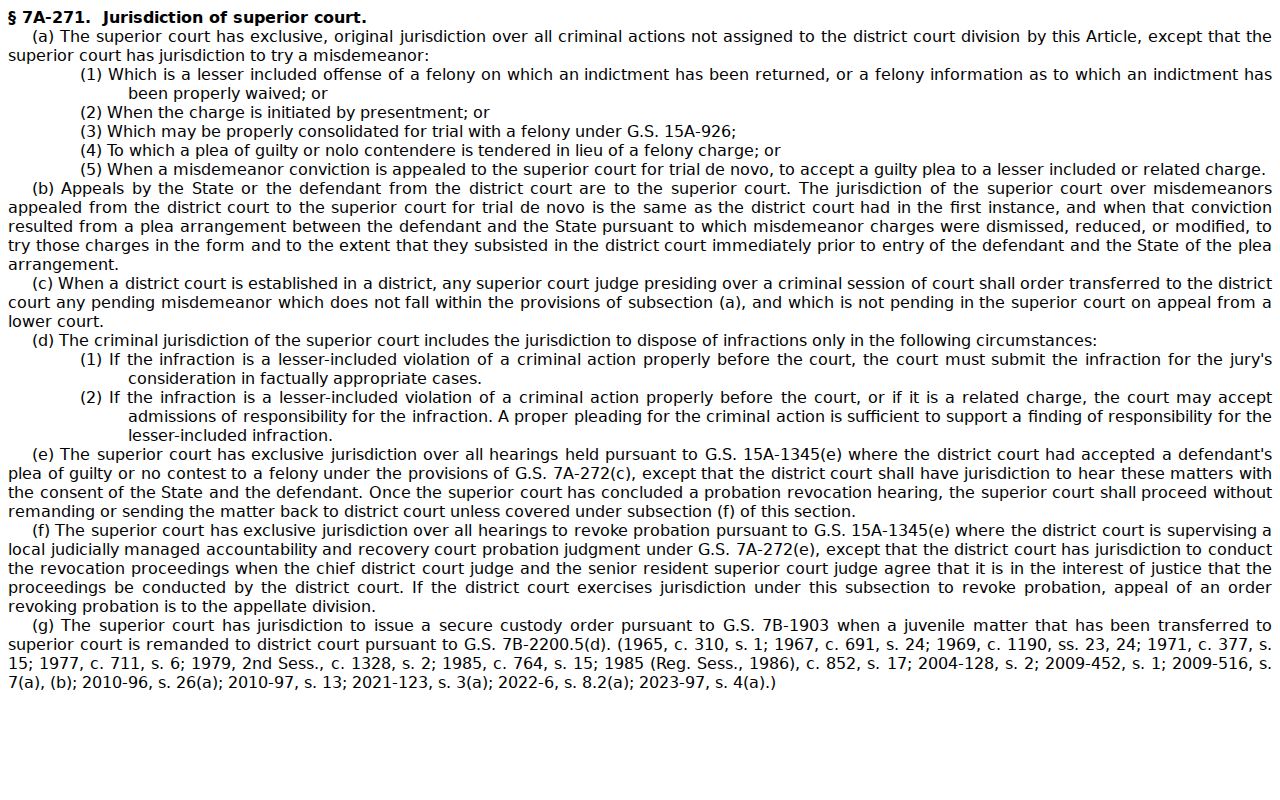
That jurisdictional split is practical guidance, not trivia. A Richmond County docket search should begin with the record number and its current assignment, never with an assumption drawn from the charge alone.
Criminal Case Stages on the Docket
The Register of Actions can trace a case from start to finish. Expect an initiating process or charge, early District Court events, arraignment or another setting, pretrial and bond or motion activity, a Superior Court transfer where applicable, plea or trial, disposition, and sentencing or financial follow-up. No two criminal files follow the same sequence. Find the current status first. Then spot the latest hearing entry. Read through the related events on both sides of it instead of trusting one label.
Docket flow: Charge or initiating process › District Court activity › Arraignment or setting › Pretrial events › Plea or trial › Disposition › Sentencing or financial follow-up
The statute governing eligible criminal appeals from District Court spells out the required notice and the trial-de-novo route.
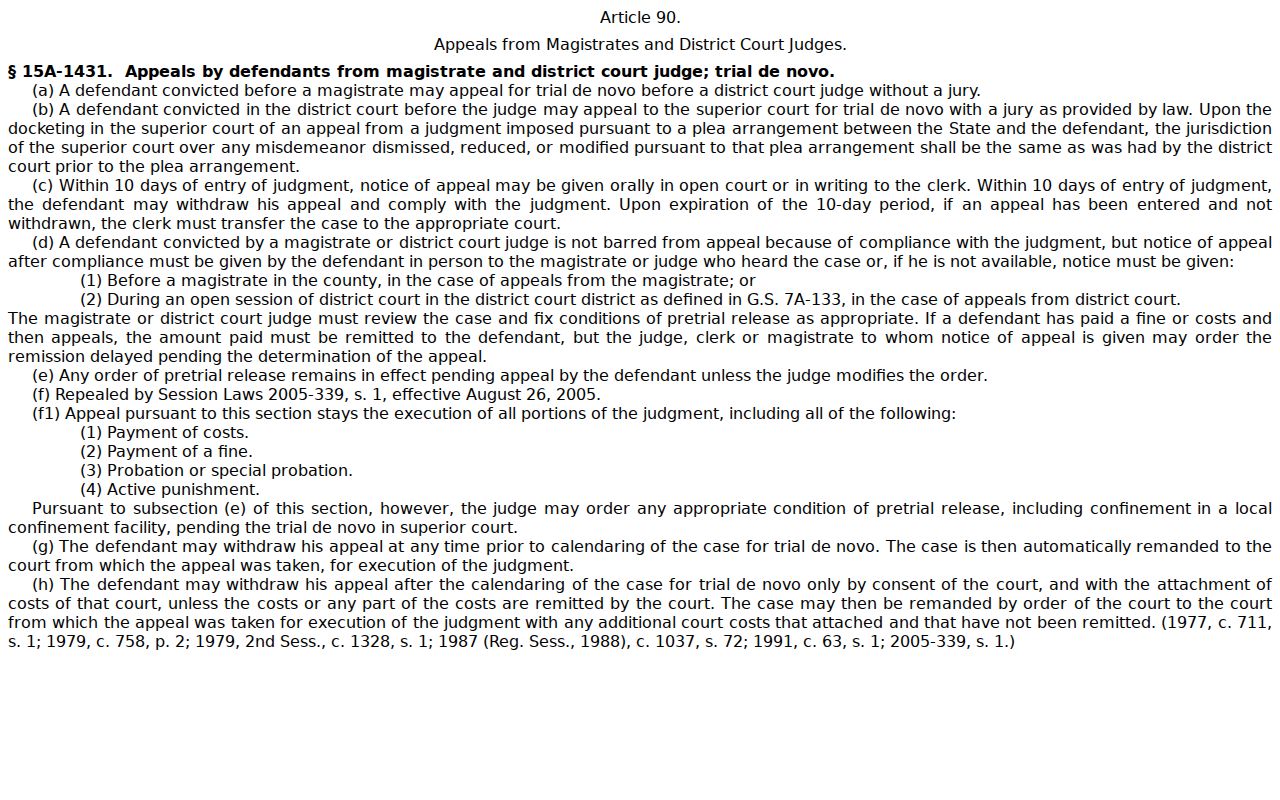
Read any appeal, remand, or transfer entry together with its date and the current assignment. It may shift where the next Richmond hearing shows up.
Richmond County Criminal Docket Calendar
Two tools cover criminal scheduling here, and they do different jobs. The Portal Case Summary shows case history plus a hearing block. The county calendar shows a published schedule for a whole criminal session. For a current date, Search Hearings with the live Case Summary is the better check. A date may be close. It may be missing, or the two may conflict. Call the clerk then, rather than trusting an older calendar entry. The Richmond County criminal docket calendar is only as current as its last publication. The official Richmond criminal calendar endpoint carries the county and Criminal parameters. Those parameters drive that schedule view.
The calendar helps you locate a session. For one specific pending matter, live hearing information plus clerk confirmation is the safer route.
Richmond County Criminal Docket Courts
Richmond's criminal court records are not split among a sheriff database, a city court, and a separate felony clerk. One office holds the integrated local record. That office is the Richmond County Clerk of Superior Court, serving the trial divisions. District Court handles criminal matters below the felony level. It covers infractions, traffic, misdemeanors, and municipal-ordinalance violations, plus municipal-ordinance cases. The serious felony trials and higher-level criminal proceedings sit in North Carolina Superior Court, Judicial District 21. Magistrates handle certain initial criminal functions inside the District Court system. A citation out of Rockingham, Hamlet, Ellerbe, Dobbins Heights, or Hoffman still does not create a municipal-court docket. Search the Richmond location in Portal first. Then let the case type, assignment, and hearing information tell you which trial division owns it. The North Carolina Court of Appeals is the usual intermediate appellate court. Its separate appellate matter is not a second Richmond trial docket.
Richmond County Criminal Docket Statuses
Portal's criminal and infraction filters run from Appealed – Appellate, Archived, Completed, Disposed, Pending, Pending – Reported to DMV, Pending Expungement, Remanded, Transfer to Another County, Transferred to Superior Court, and Voluntarily Dismissed with Leave. These labels narrow a search well. They still need context from the case events around them. "Disposed" never tells you which disposition occurred. And "Pending" only means the system still shows the matter as open, not that every next step appears on the first result screen of the court docket.
- Transferred to Superior Court
- An event or status showing movement to the Superior Court division, often important in felony or appeal context.
- Appealed – Appellate
- A criminal or infraction status that signals appellate posture rather than a new local trial file.
- Pending – Reported to DMV
- A Portal filter label for criminal or infraction cases, not a final conclusion about any separate licensing record.
When a status looks unfamiliar, find the dated event behind it. Then ask the clerk about the court file instead of drawing a result from the label alone.
Access Rules for Criminal Dockets
North Carolina law opens the clerk's court records and indexes to the public unless another law creates an exception. Using Portal changes none of that. Nonconfidential Case Summary information, hearings, dispositions, and some public documents may be available. Sealed or confidential cases, sensitive documents, unreturned criminal warrants, juvenile records, and protected domestic-violence access elements stay closed to ordinary public users. A record that fails to appear proves nothing. It is not evidence that no case ever existed.
North Carolina access rules:
N.C.G.S. 7A-109 makes the clerk the custodian of court records and indexes, subject to legal exceptions.
N.C.G.S. 132-6 provides inspection and copy access for public records under reasonable procedures and applicable confidentiality law.
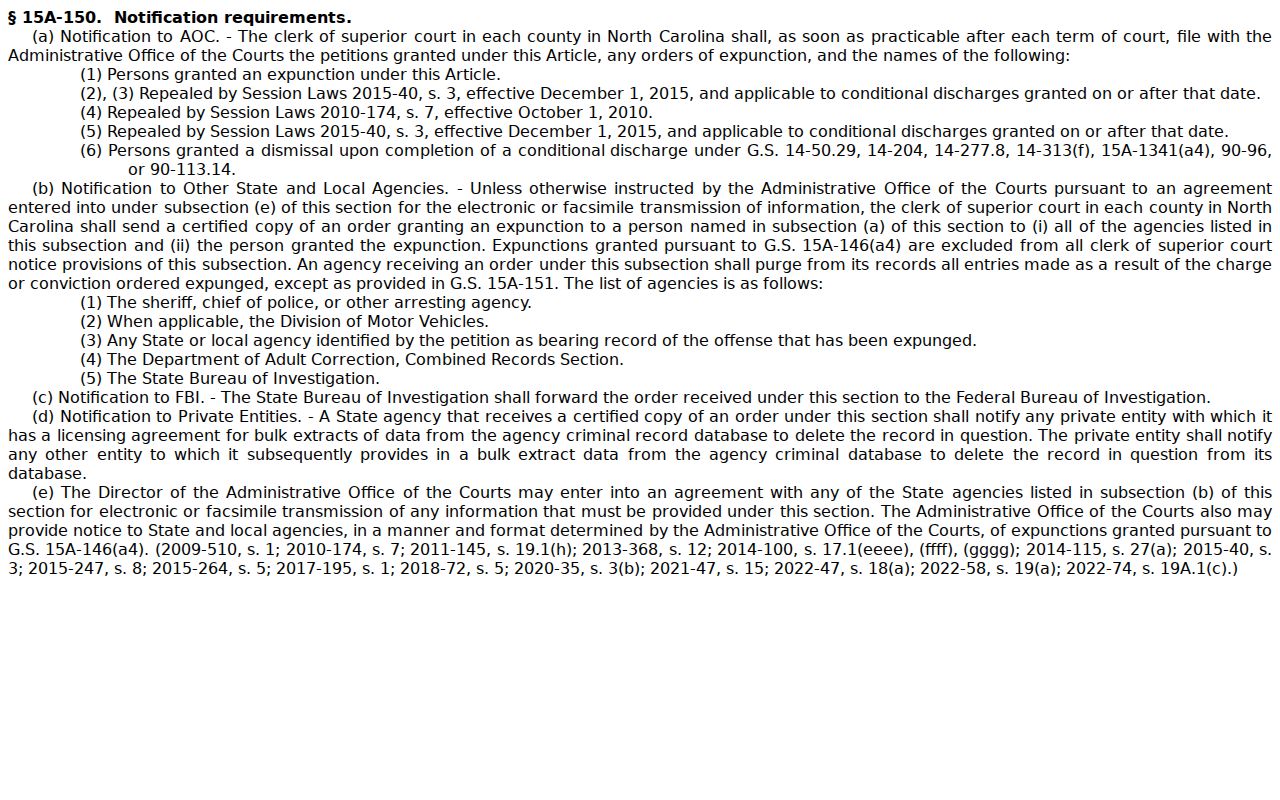
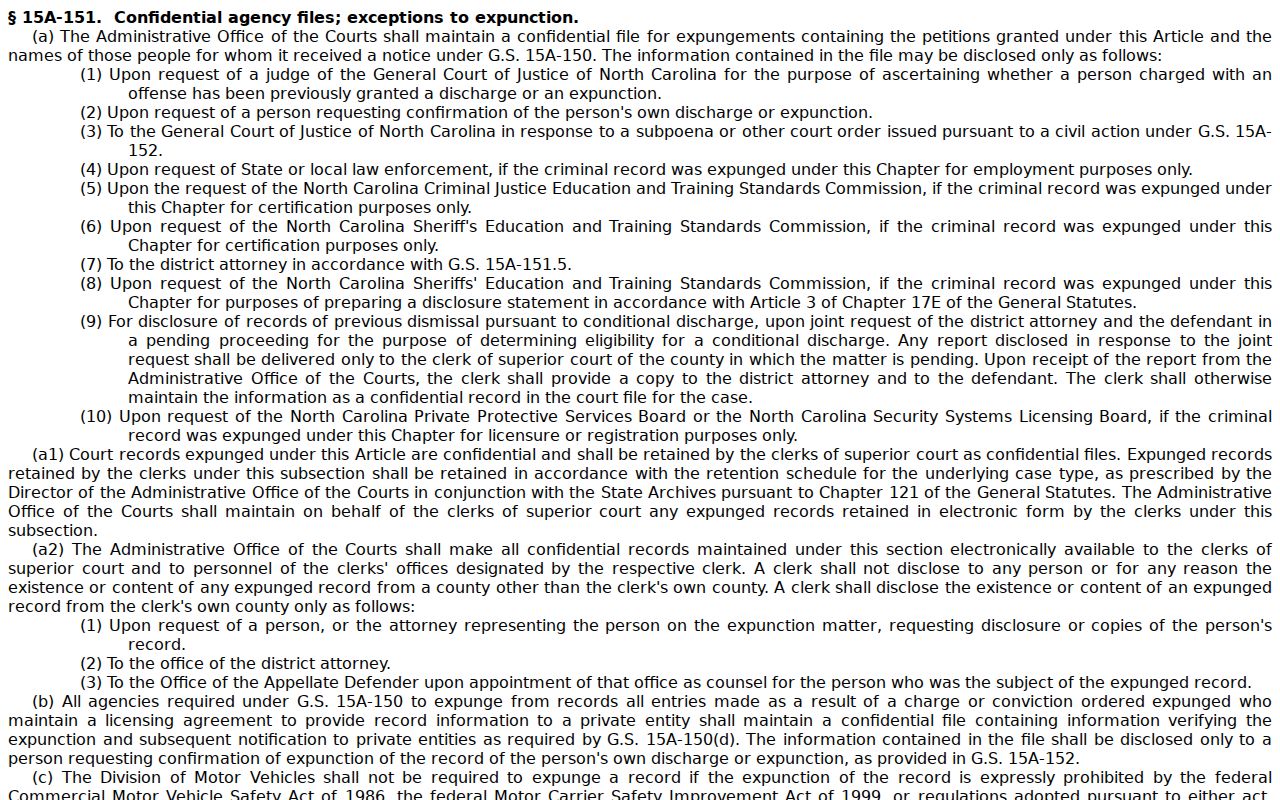
N.C.G.S. 15A-151 governs confidentiality consequences after an expunction.
North Carolina's expunction statutes explain why an expunged matter may not appear as an ordinary public case.
The Richmond Clerk is the right contact for an official record, an access question, or any request governed by a restriction. A routine Portal account cannot override those limits. Neither can another local office.
Richmond County Criminal Docket Limits
The statewide 2025 recovery-court report is out. It does not list Richmond among the active 2024 judicially managed accountability and recovery courts. That omission does not prove every local program is absent. Still, do not assume a Richmond drug, veteran, mental-health, or DWI specialty docket exists without a current local source. Ordinary criminal cases belong elsewhere. They go in the Portal, the criminal calendar, and the Richmond Clerk's unified court-record route. The North Carolina Recovery Courts program page gives the statewide program context.
For a current Richmond criminal setting or case history, the named court channels beat a presumed specialty-calendar label. That label may simply be a guess.