
Richmond County Court Docket Searches
Start your Richmond County court docket search at the North Carolina eCourts Portal. Smart Search there opens the public Case Summary. The Portal guidance also labels it a Register of Actions. Richmond County joined the Odyssey environment in 2024. One Portal route covers all of it: public Superior Court, District Court, traffic, civil, small-claims, family, estate, and special-proceeding files. Treat any result as a lead, not a certified record.
Bring a full name or a record number. Richmond County numbers follow the Enterprise Justice format. You get a year, case-type letters, a six-digit sequence, and the county suffix -760. A citation number works too, through Advanced Filtering. A broad name search can flood you with hits. Set Richmond as the location. Then narrow by case type, status, or a filing-date range.
- Open Smart Search and enter a record number or a name in last-name, first-name order.
- Use Advanced Filtering Options when the result set is broad, including the Richmond location and an appropriate case type.
- Select the returned record number and read the Case Summary/Register of Actions in date order.
- Check its hearing area or Search Hearings for a current setting, then compare the appropriate county calendar if a printed schedule is needed.
- Call or visit the Richmond County Clerk of Superior Court for a missing file, a current balance question, or an official copy.
Note: An empty result can mean the filters were too tight, the file predates electronic records, or access is lawfully restricted. It is not proof that no case exists.
Richmond Portal Case Summary Search
The Portal goes deeper than a name index. A public Case Summary lays out a lot. It covers case information, assignments, participant details, causes of action where they apply, chronological events, hearings, dispositions, and financial information where relevant. That timeline helps you tell a coming hearing apart from an old procedural step. Document links may appear. But a link is not a promise that every paper or sensitive filing is online.
Anonymous users can search without an account. Registering adds saved-case features, not wider reach into restricted material. The official Portal training materials also walk through Smart Search, hearing search, and eligible payments. Remember what this tool is. It is a state system, the local access route for Richmond County, not a separate city or county vendor database.
| Smart Search control | Use for a Richmond County docket search |
|---|---|
| Record Number or Name | Start with a full record number or a last and first name. |
| Search Type | Use the advanced menu for a citation number or other supported search type. |
| Location | Select Richmond to narrow a statewide result set. |
| Case Type and Status | Use compatible selections; a mismatch can remove useful results. |
| Filing Date | Use a date range only when it helps narrow the search. |
Court Dockets: What They Show
In practice, a Richmond County Case Summary is the local court docket, a chronological Register of Actions tracking the case and its movement through court. Expect court location, assignment, parties, and case type. Events, hearings, disposition, and financial information appear when applicable. Which fields show up depends on the case and your public access role. And a docket entry is not the order itself. It is no substitute for the underlying public order or a certified document.
| Record number | The Enterprise Justice identifier, commonly ending in Richmond County code -760. |
|---|---|
| Case information | Core case attributes, current status, and location or assignment context. |
| Participants | Party and attorney information where public; Portal masks sensitive date-of-birth details. |
| Case events | The dated Register of Actions timeline, which records procedural activity. |
| Hearings | Scheduled event information that should be checked for a live court date. |
| Disposition and financials | Outcome entries and financial information when applicable; the clerk confirms an official payoff. |
Case information from a Richmond County search helps you follow a matter. The Clerk issues official copies. That distinction matters whenever an official process needs a document under seal.
Richmond Docket Times at Midnight
Richmond County entered eCourts in the Track 6 conversion. The October 2024 go-live notice names the shift to Enterprise Justice, eFiling, and Portal. Here is the quirk. Old events carried over from paper or legacy systems can show a time of 12:00 a.m. in a Case Summary. That is a conversion convention, nothing more. No court session happened at midnight.
The Judicial Branch’s statewide overview explains how the system works. Richmond County users now start with Portal rather than a legacy local public-search setup, and the Clerk still provides the official file or help with a nonpublic document. View the North Carolina eCourts system overview.
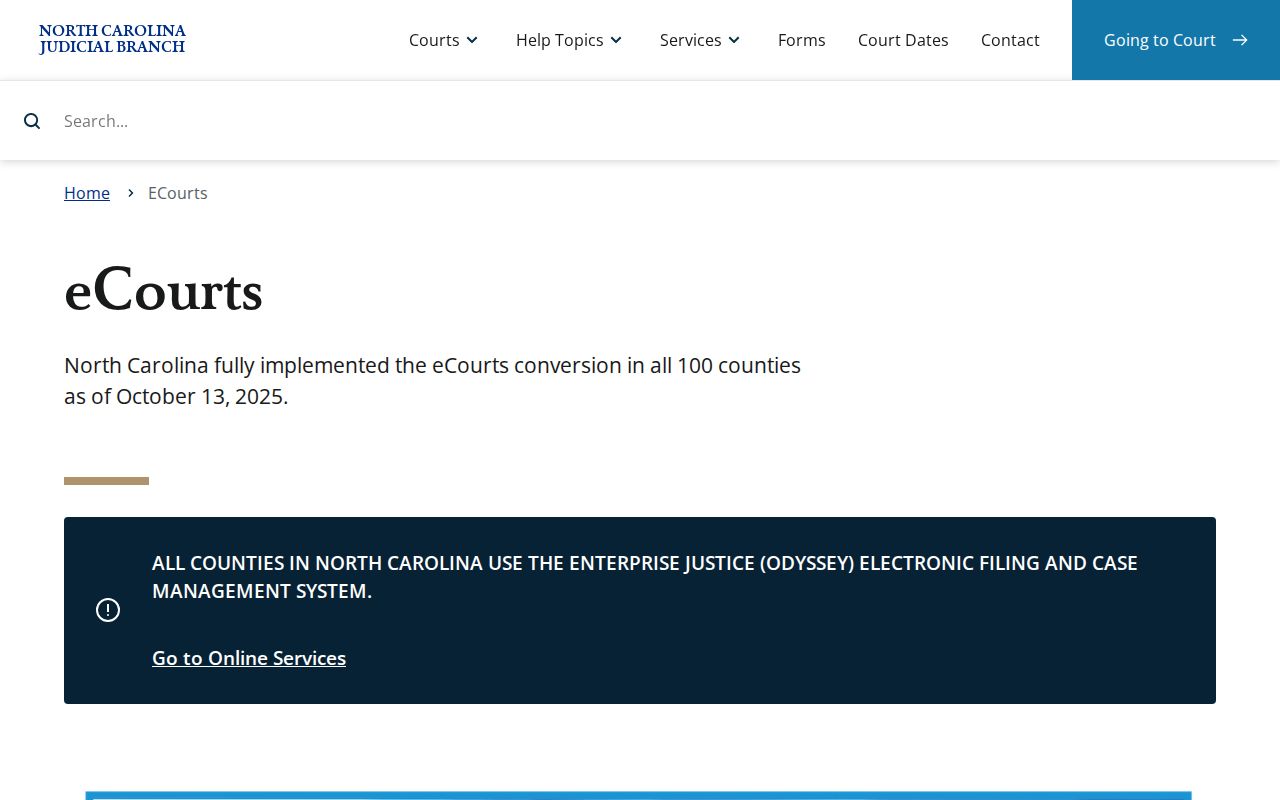
Because the rollout was statewide, a Richmond County court docket now sits in the same public Portal framework as other converted counties. Read the Richmond eCourts go-live announcement.
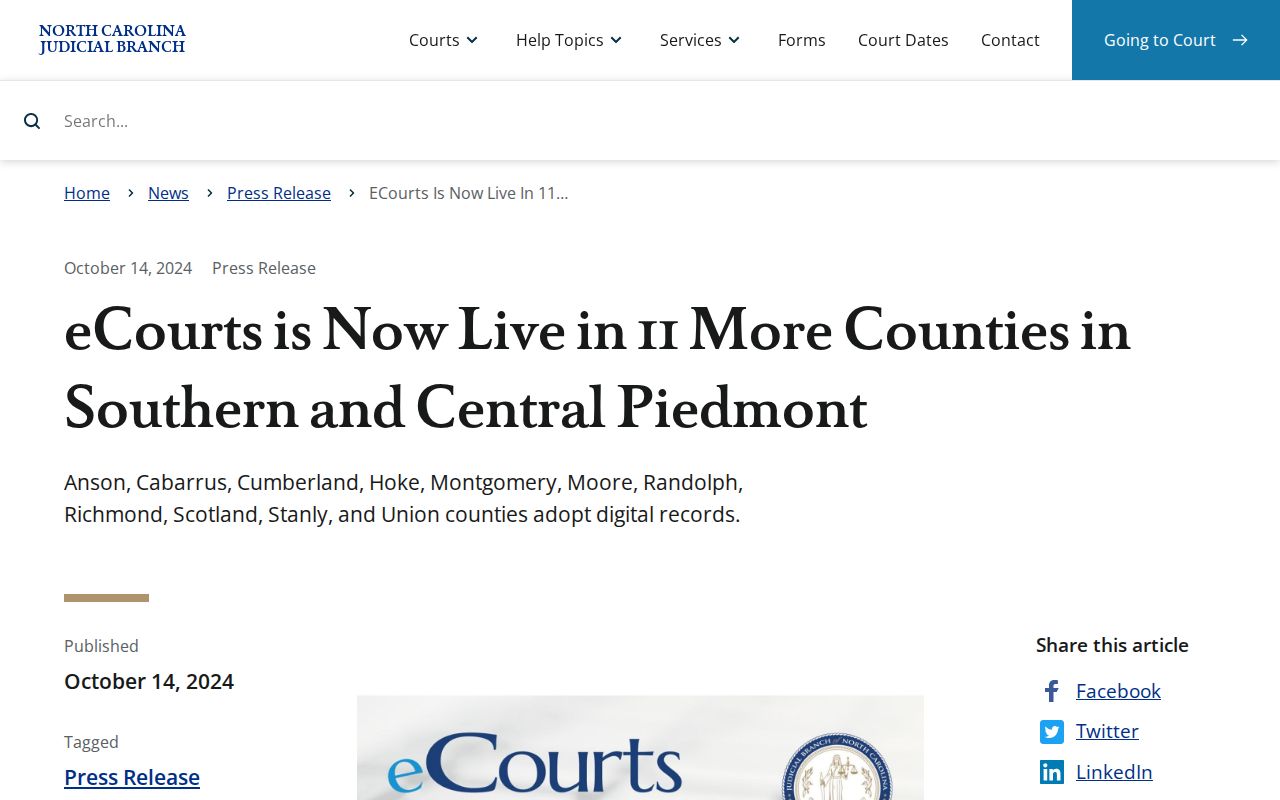
Know the conversion date. When an older event looks unlike a current Portal entry, that timeline explains the difference in a Richmond County record.
Richmond County Courts and Their Dockets
Richmond County belongs to North Carolina’s unified General Court of Justice. The Richmond County Clerk of Superior Court keeps the local records for both trial divisions. Superior Court sits in Judicial District 21. It takes felony trials and higher-value civil matters. District Court handles misdemeanors, traffic, and infractions. Small claims, family matters, many civil cases, and municipal-ordinance violations also land there. Magistrates work within the District Court system. They handle small claims and certain initial criminal functions.
| Richmond County court route | Docket or case type | Where to start |
|---|---|---|
| Superior Court, Judicial District 21 | Felony trials and civil matters above the statutory division line | Portal Case Summary, hearing tools, and the Richmond Clerk |
| District Court | Misdemeanors, traffic, infractions, ordinary civil matters, family, and ordinance cases | Portal, county calendars, and the Richmond Clerk |
| Magistrate / District Court system | Small claims and related magistrate functions | Portal and the Clerk rather than a separate justice-court site |
| Clerk probate jurisdiction | Estate and probate proceedings | Portal where public and the Richmond Clerk for the case file |
Richmond County’s $25,000 Docket Line
Read the civil side of a Richmond County court docket from the court assignment, not the caption. N.C.G.S. 7A-243 draws the line. It sends ordinary civil actions at $25,000 or less to District Court and those over that amount to Superior Court, subject to statutory exceptions. Small claims start before magistrates in the District Court system.
Cases can also cross division lines. A felony may show District Court preliminary activity before Superior Court trial events appear. An eligible District Court criminal appeal can move up to Superior Court for trial de novo. That is a fresh trial, not a review of the earlier record. For a real answer, check the assignment and current status in the Register of Actions. Do not trust a city name or a broad case label.
Note: The Clerk stays the local case-file custodian. That holds even when the Richmond County matter sits in the other trial division.
Court Dates and Settings in Richmond County
Three official tools track Richmond County court dates. They are the Case Summary hearing information, Portal Search Hearings, and the county's separate civil or criminal calendar. A calendar works well as a session list. For a setting that may have shifted, though, the live Portal hearing entry and the Clerk give stronger confirmation. The full local process sits on the Richmond County court schedule page.
When a hearing is close, search Portal with the sharpest identifier you have. Search Hearings wants a location, a hearing type, a search type, criteria, and a date range. Enter Richmond for location. Then cross-check the civil or criminal calendar too. A date can look off, get touched by a closure, or get missed. Call the Clerk instead of trusting an older schedule.
Richmond Civil and Criminal Calendars
Richmond County splits its calendar access by case type. Civil and criminal dockets each have their own published route. That split helps once you know the category. When the question is one live case, Portal Search Hearings is often the better tool. The Superior civil side adds a layer. The District 21 Trial Court Coordinator manages civil calendars for Richmond, Anson, and Scotland. That work runs under the Senior Resident Superior Court Judge's supervision.
A civil case can become ready to set in several ways. One is 120 days on file. Others are a clerk appeal or remand, statutory priority, or a readiness certification. The Richmond Superior Civil Calendar Request separates jury, nonjury, and motion requests. It also covers case categories like default, contract, negligence, land-dispute, caveat, and others. Need a motion date? Get it from the coordinator before filing. The request must then meet the local delivery cutoff. Otherwise it will not land on the printed session calendar. View the Track 6 transition notice for Richmond County. The notice shows how the statewide system rollout reshaped local court operations.
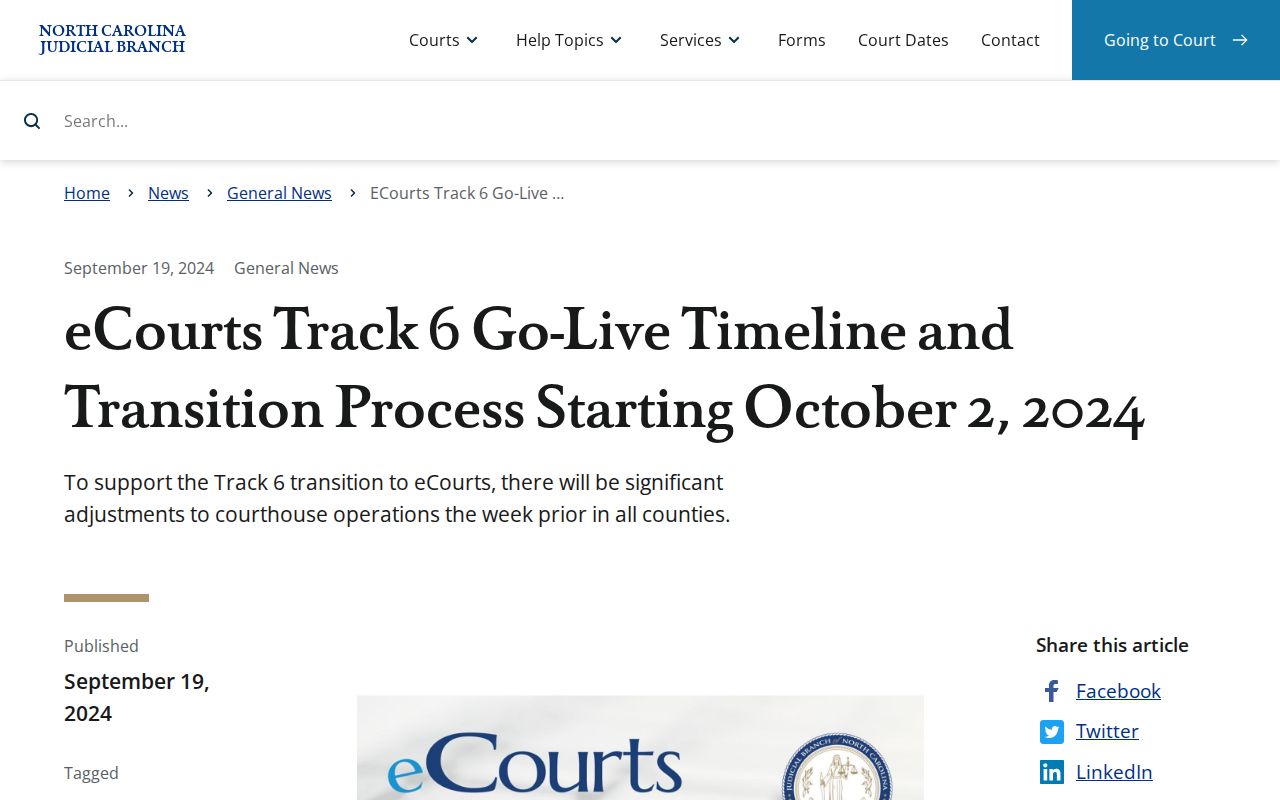
System launches can shift court operations with little warning. That is why the live Richmond County hearing tools matter more than any static docket list.
Docket Access Under North Carolina Law
Public access has limits. Richmond County court records are open unless a law or court rule says otherwise. That openness covers the online Case Summary, too. Still, no rule promises that every file image is public. Sealed, confidential, and sensitive material stays out of the Portal. So do juvenile cases and protected domestic-violence information. An expunction can remove a matter from ordinary public case access as well.
Key North Carolina access rules:
N.C.G.S. 7A-109 makes the clerk the keeper of court records and indexes, subject to legal exceptions.
N.C.G.S. 132-6 establishes public-record inspection and copy access subject to reasonable procedures and confidentiality law.
N.C.G.S. 7B-3000 explains why juvenile records are not a general Portal-search substitute.
The practical rule for Richmond County docket access is short. Use Portal for public case information. Then ask the Clerk for an official copy, or for the lawful procedure that governs a restricted record.
Richmond County Docket Access Limits
Portal limits go beyond hidden documents. Ordinary public search does not reach sealed or confidential cases. The same goes for sensitive documents, unreturned criminal warrants, juvenile records, and protected domestic-violence Portal information. Dates of birth also appear partly masked in public search results. And a normal Portal account does not raise the public user's access role.
A case lookup can therefore look incomplete. That gap is not an invitation to hunt through a city-hall site. Nor does it excuse bypassing court controls. In Richmond County, anyone with a lawful reason to ask about a restricted file should contact the Richmond County Clerk of Superior Court. That office follows the governing procedure. Keep one point in mind: a missing result does not prove an event never happened.
How the Clerk Keeps Docket Records
Vickie Daniel heads the local unified clerk office as Richmond County Clerk of Superior Court. Portal gives the public the Case Summary/Register of Actions for available files. The Clerk's office remains the in-person route for other needs. That covers a paper-era file or a certified copy. It also handles a public computer search and current financial confirmation. And a record that needs human review fits here too. Transcripts work differently. The court reporter is the right contact for that request.
Richmond County Clerk of Superior Court
Richmond County Judicial Center
105 W. Franklin St., Rockingham, NC 28379
(910) 419-7400
The Judicial Center location page confirms the courthouse channel and its public hours. Call first before mailing a case-copy request, since the clerk posts no Richmond-specific copy-request form or fixed turnaround time.
Note: The statewide January 2026 cost chart lists copy and certificate components, but the Clerk confirms the total for a specific requested document.
Richmond Court Copies and Archives
Three record types should not be collapsed into one. The Case Summary is the Portal timeline. A filed document is the pleading, order, judgment, exhibit, or other item behind a docket event. A certified copy is issued by the Clerk, and it is the right channel when an official court-stamped document is required. Transcript requests go to the court reporter, not the Clerk's online document view.
For older Richmond County material, the Clerk is still the first contact for active cases. The State Archives' Richmond County finding aid covers historical courthouse-related material from 1790 through 1925. That trail helps with a closed historical research question. It does not replace the current case file. View the Cape Fear Museum's North Carolina history resources. The museum's collection documents the deeper record trail behind the region's courts.
Older Richmond County files may call for a trip to the Clerk or the archives. For current public case activity, though, the Portal is where things begin.
Richmond County Cities Use District Court
Rockingham, Hamlet, Ellerbe, Dobbins Heights, and Hoffman are all incorporated. Even so, none runs its own municipal court docket. A ticket or ordinance allegation from any of these cities still lands in the same place. Richmond County sends that work to District Court and the Clerk, so a city name on a citation tells you where something happened, not which court holds the file. One system handles it all.
The 2020 Census table ranks cities by population. That ranking only sets the order of the city pages here. It has nothing to do with court jurisdiction. Every one of these communities meets at the same Clerk, Portal, District Court, and Superior Court framework. It covers their court records and court dates.
View the 2020 incorporated-place population table.
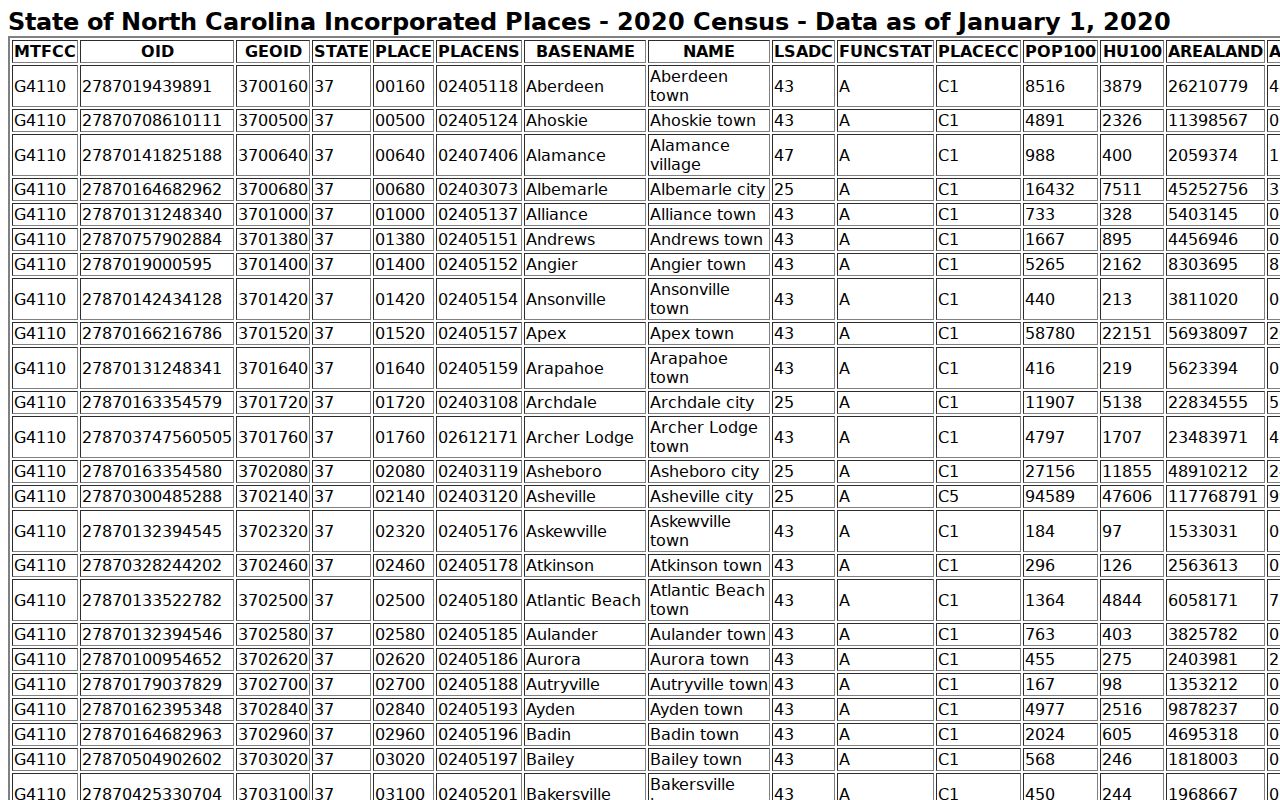
The population data identifies the five Richmond County city pages without implying a city-court system that does not exist. Review North Carolina municipal population context.
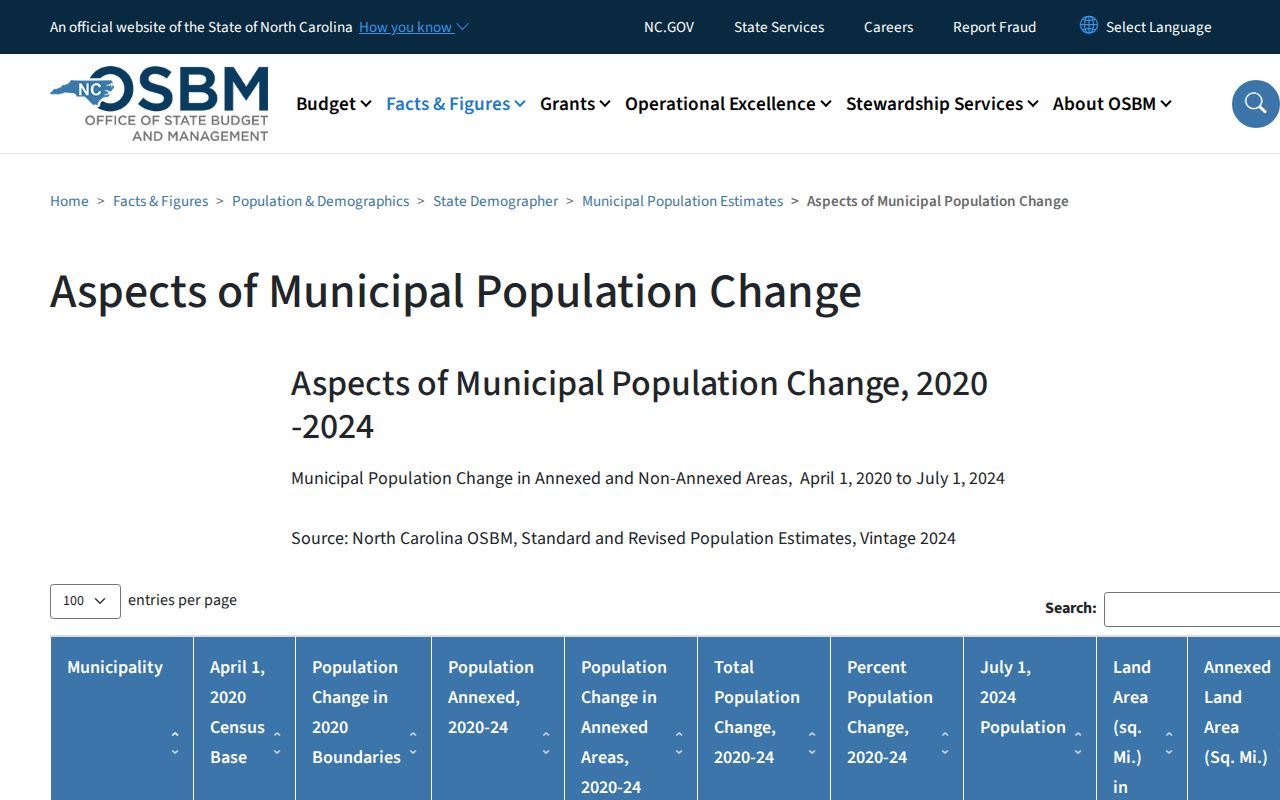
Current municipal figures do not change the route: Richmond County court records and court dates still run through the county channel.
City-by-City Court Dockets in Richmond County
Every city profile takes the same path. A citation or event goes to Richmond District Court and the Clerk. The Portal supplies whatever Case Summary information it holds. Rockingham sits at the center as the county-seat home of the Judicial Center. Hamlet, Ellerbe, Dobbins Heights, and Hoffman run no separate municipal-court search systems. Their pages stick to city context. The docket work routes to the proper Richmond County channel.
Rockingham Court Records
9,243 in the 2020 Census · County-seat courthouse location; no separate city court docket.
Hamlet Court Records
6,025 in the 2020 Census · City matters use Richmond County District Court and Portal.
Ellerbe Court Records
864 in the 2020 Census · Town services do not replace the Richmond court route.
Dobbins Heights Court Records
687 in the 2020 Census · Search Richmond, not a separate municipal court portal.
Hoffman Court Records
418 in the 2020 Census · Cases roll into the unified Richmond County system.
Richmond Federal Docket Boundaries
A Richmond County state case will not tell you whether a federal case exists. Those matters belong to the U.S. District Court for the Middle District of North Carolina. That court works through PACER. It is an account-based federal docket system, separate from anything at the county level. The Portal, by contrast, covers only the Richmond County state-court route. Keep the two straight. A PACER result cannot replace a clerk-certified state record. A Portal Case Summary cannot substitute for a federal docket.
Visit the Middle District of North Carolina court.
The federal court site draws the line between Richmond County state dockets and a wholly separate federal records system. See Middle District bankruptcy case information.
Bankruptcy follows its own federal case-information route. It never appears in the Richmond County Clerk's Portal Case Summary. See U.S. Attorney contact information for the Middle District.
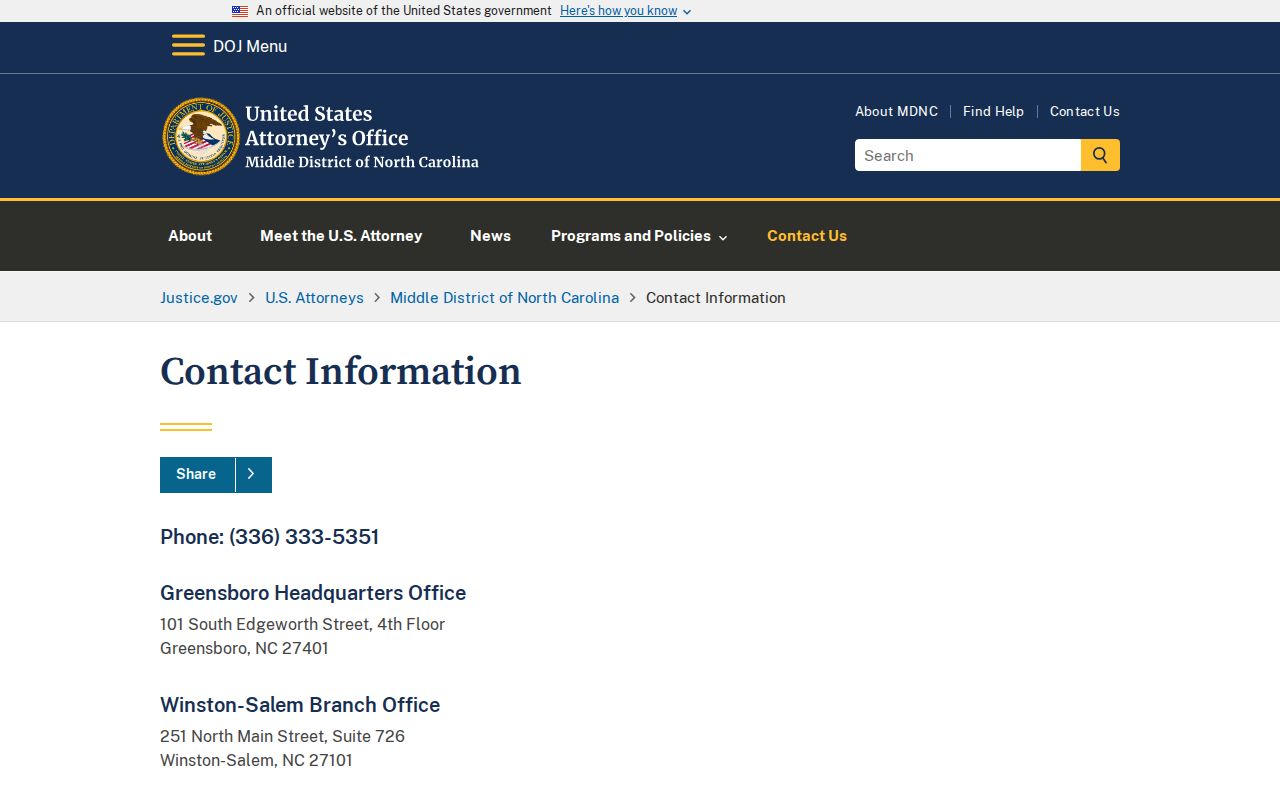
Federal office contact information offers jurisdictional context only, not a Richmond County docket-search channel.
Map and Directions to the Richmond County Judicial Center
Superior Court and District Court files for Richmond County are kept at the Richmond County Judicial Center, 105 W. Franklin Street, in Rockingham. The Clerk of Superior Court's office there is the single custodian for both trial divisions, covering criminal, civil, traffic, small-claims, and estate matters for the whole county rather than separate city or district-clerk counters. Rockingham, Hamlet, Ellerbe, Dobbins Heights, and Hoffman all route their court business to this one building.
Richmond County Judicial Center
105 W. Franklin St.
Rockingham, NC 28379
(910) 419-7400
Monday through Friday, 8:00 a.m. to 5:00 p.m.
No official Richmond source publishes parking, security-screening, or accessibility details for the Judicial Center, though a current local order does cover attire, conduct, and prohibited items, so calling the Clerk before a visit is the best way to confirm what can be brought inside.